|
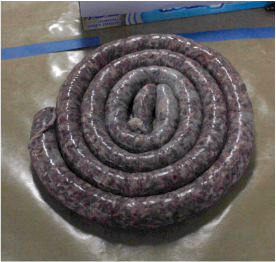
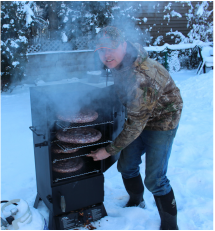
Posted by: Jesse Williams  This year we tried something new when we were making our annual deer sausage- pepperoni's! This called for a different casing than we were used to but overall we think our first attempt was a success. Check out this simple recipe below! If you've seen our Big Game Sausage recipe, this will follow the same format, except for different spices and casings. You can reference that recipe for lots of tips and tricks in preparing the 60/40 ratio of ground deer to pork that we used. Ingredients (20lb batch)20lbs of ground meat (we used 12 lbs deer, 8 lbs pork) 1 pkg Original Wild West Pepperoni Sausage Seasoning (we paid $7.99 at Peavy Mart) Pepperoni Casings (we purchased them from our local grocery store's butcher division) Hot water for mixing DirectionsThis recipe is too easy. After grinding your deer/pork, mix them together with your hands, adding in the package of spices and any hot water you may need to increase the mixability of the pepperoni. Once you are satisfied that the mixture is well combined, transfer the ground meat to your sausage press. Because pepperoni's are typically much smaller than sausage, we reduced our sausage press tip to about 0.75" diameter, however do whatever your family prefers. This will be larger than the traditional 'Hot Rods' you get at the convenience store, but makes for a great snack! 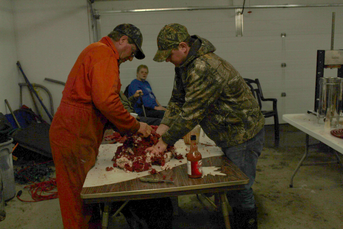 Push the casings onto the tip of the sausage press. You will notice that they are a lot stiffer than your sheep gut casings you might be used to with sausage. They're also red. Very red. And that dye will get everywhere! I would highly recommend laying down a plastic sheet on your table as the red dye could turn light colored tables pink!. 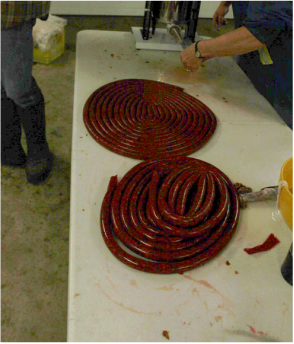 We tried pinching the pepperoni's into individual sizes as it came out of the press, but quickly found out that wasn't very efficient. I would recommend just making one big coil of pepperoni until you run out of casings, then pinch them off after. 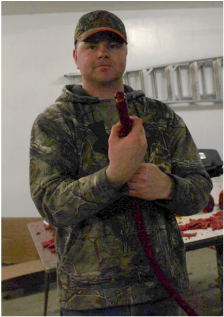 The last step is to cold smoke the pepperoni's so that they are ready for snacking. We use a small propane powered smoker, and although we can't fit a lot in at a time, its quite effortless- just put them in and forget them. We smoked our pepperoni's for about 4 hours. Check often to ensure you are not burning them, but that they are still cooked all the way through, as we don't cook them again before eating them. We then just packaged them in Ziploc freezer bags and threw them in the freezer for easy access whenever we want a snack! 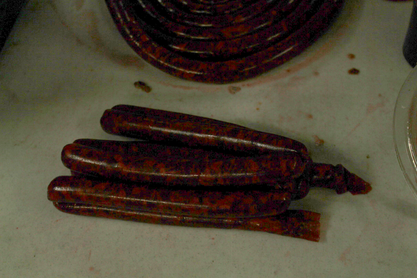 pinched pepperoni before smoking You may also like these other #meatmonday recipes...
0 Comments
By: Jesse Williams 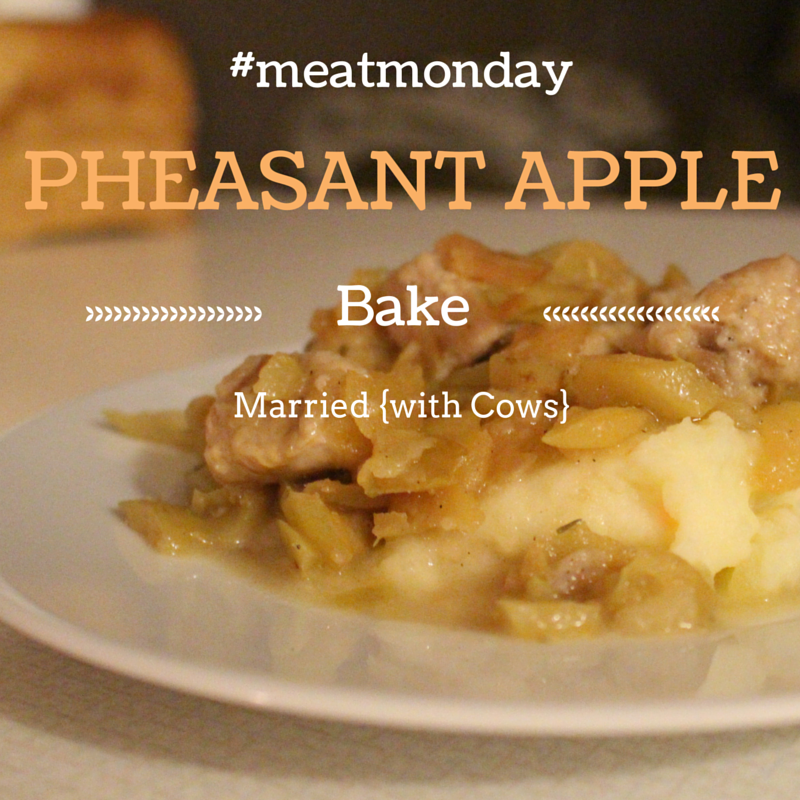 Ingredients
Directions Preheat oven to 350F In a small bowl, combine flour, salt and pepper. Chop the pheasant breasts in to bite sized cubes. Coat each piece of pheasant in the flour mixture and brown all sides of the pheasant on the stove with canola oil. You may want to do this the night before to prepare to cut down on preparation time the day of. Or you could freeze the pheasant chunks for use another day. Remove pheasant chunks to a greased casserole dish. Sprinkle with salt, rosemary and pepper. Add the chopped apples to the dish, as well as the apple cider and wine vinegar. We use apples from my mom's apple tree that we core, chop and freeze each summer for easy use all year round. You can of course use fresh too. Mix thoroughly. Pop the covered casserole dish into the oven for 30-40 minutes at 350F. We usually pair this dish with mashed potatoes, so if throw some in a pot and let your house fill with the delicious aroma of pheasant! You may also like these other #meatmonday recipes...4 Favorite Pheasant Feasts
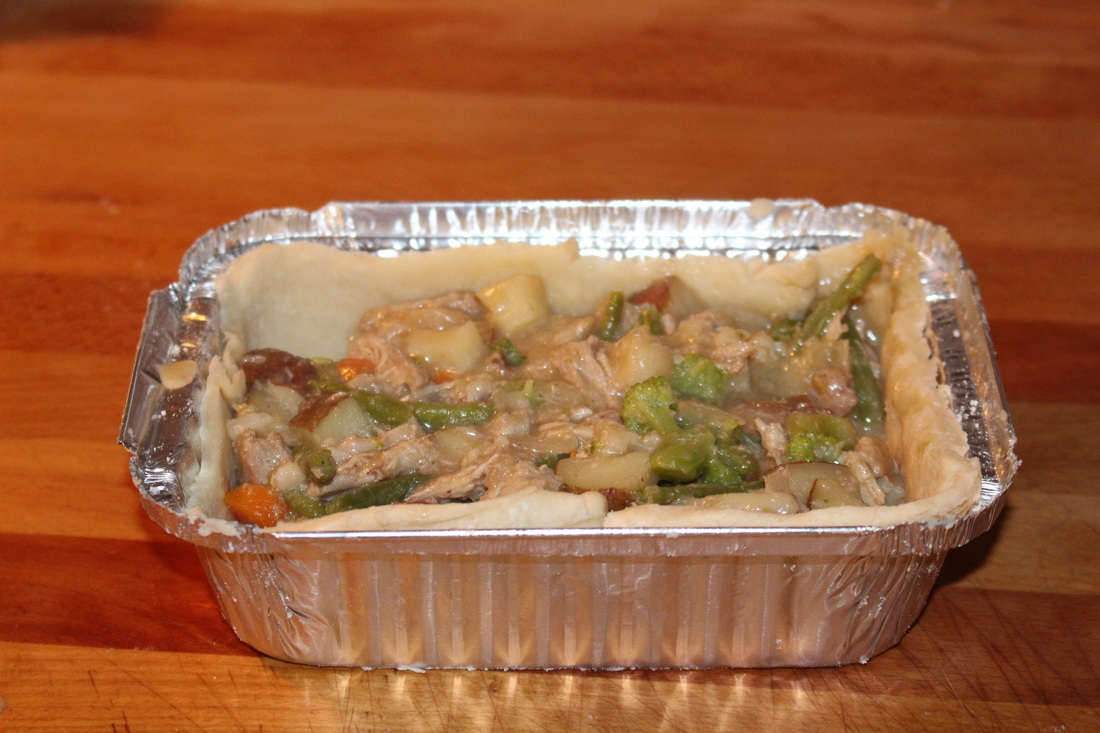
Peasant's Pheasant Pot Pie Pheasant Sliders Pheasant Fingers Big Game Sausage Easy Smoked Deer Roast Posted By: Jesse Williams 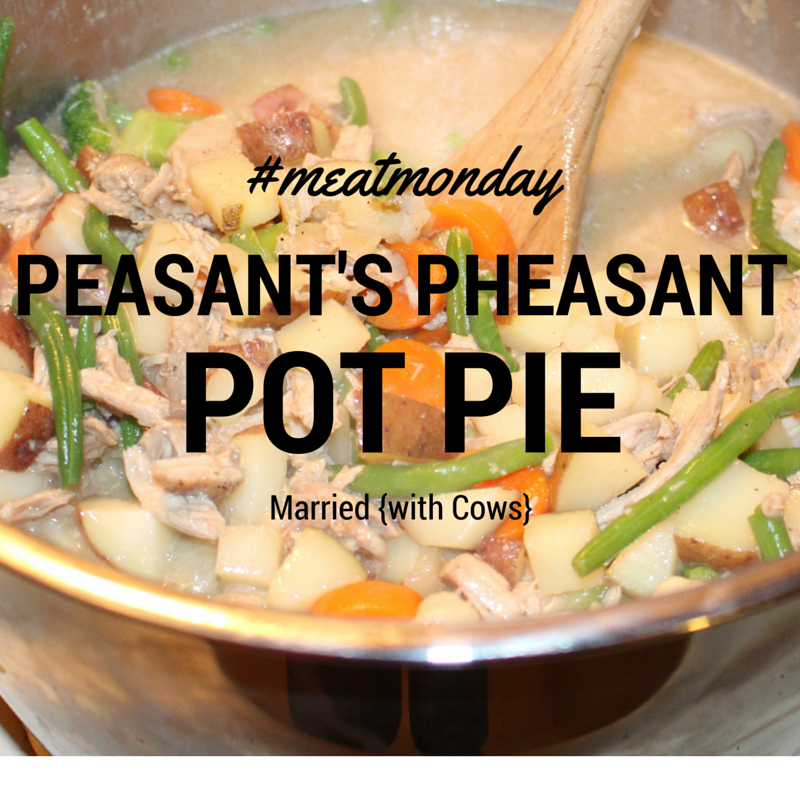 This is based off our favorite chicken pot pie recipe, which you can find here. We simply replaced the chicken with pheasant, and used up all of the extra veggies & potatoes we had in our cupboards. It was a great way to use up all of our extras, including frozen veggie leftovers! Plus, it made some room for our individual pot pies! LIFE HACK: You can bake your pheasant in the slow cooker to easily shred the pheasant before using it in this recipe. Add 4 extra breasts so you can make Pheasant Sliders too! You can easily freeze pheasant sliders and pot pies to stock up your freezer meal supply. Ingredients
Directions Preheat oven to 425. Spray tinfoil pans or dishes with cooking spray. If making your own crust see below for our recipe. If not, you can get various different pre-made crusts that will do the trick. We used home made crusts for these pheasant pot pies, but we couldn't find individual pie shells at our local grocery store, so we grabbed some small rectangular pans that should hold enough to feed the two of us with one pie! In a saucepan over medium heat, melt your butter. Stir in your onion and allow to cook for 3-4 minutes. Be sure to stir often. Add your salt, pepper and flour to the saucepan and gradually add your milk & broth, stirring. Bring to a boil. Add your chicken and thawed veggies, as well as your potatoes. Continue to stir until the sauce thickens. Remove from heat. Scoop your mixture into your pie crusts. This recipe filled 9 small individual pie plates or 7 rectangular larger pans with a pie crust on the top of the mixture with slits to allow airflow. Use your fingers to pinch the edges of the crust. At this point I put the individual pies in the freezer to be eaten later. If not freezing, pop in the oven for 20-40 minutes depending on the size of pie you chose. Crust Ingredients2 cups all purpose flour 1 cup shortening or lard 1 tsp salt Create a slurry with: 1/3 cup all purpose flour 1/2 cup ice water Crust DirectionsIn a large bowl, combine flour and salt. Cut in shortening with a pastry blender until you achieve pea-sized crumbs. In a separate bowl create the slurry of flour and ice water. Be sure there are no lumps. Add slurry to the large bowl, mixing the dough with your hands. Turn dough onto a floured surface and fold the dough onto itself while kneading to create layers. Use a rolling pin to roll the dough out to the desired thickness. I used a bowl that was slightly bigger than the tin foil pie plates I was going to use, to cut the crust. Note: I had to make this particular crust recipe twice to have enough dough to make 9 small individual chicken pot pies. Many recipes only call for a top crust, not a bottom lining crust. If you choose to go that route the above recipe will be adequate for the amount of filling made in step one. If you choose to make one large pot pie the above recipe should be enough for one full top and one full bottom crust. You may also like these other #meatmonday recipes... 4 Favorite Pheasant Feasts
Apple Pheasant Bake Pheasant Sliders Pheasant Fingers Big Game Sausage Easy Smoked Deer Roast Posted By: Jesse Williams 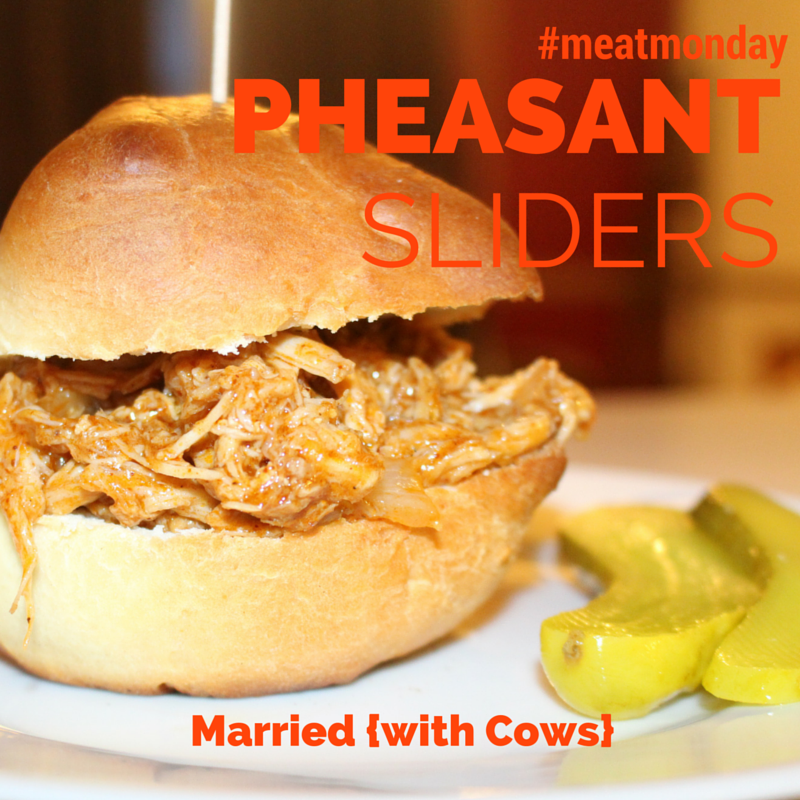 Ingredients 4 pheasant breasts 1 can chicken broth 1/4 tsp salt 1/8 tsp pepper 3/4 cup barbeque sauce 1/2 small onion, chopped 1/2 Tbsp canola oil 1 Tbsp brown sugar Directions This recipe requires some work beforehand to create the pulled pheasant. I like to start the morning we are going to enjoy the dish by cooking the pheasant breasts in a slower cooker on high for 4 hours. Throw in the pheasant breast, chicken broth, salt and pepper. Let simmer until cooked. LIFE HACK: While you are baking the pheasant in the slow cooker, add 4 extra breasts so you can make Peasant's Pheasant Pot Pie too! You can easily freeze pheasant sliders and pot pies to stock up your freezer meal supply. Take the pheasant out of the slower cooker and use two forks to shred the breasts apart until it resembles pulled pork. 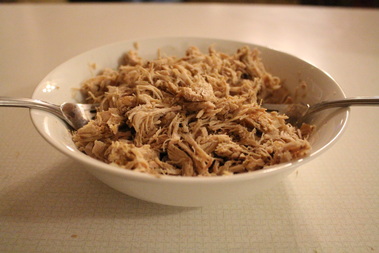 You can now either add the sauce ingredients to the crock pot with the shredded chicken and let it simmer for a an hour or so, or you can make the sauce on the stove. If that's the case, add the onion, barbeque sauce, oil and brown sugar to a pot. Let simmer for 20-30 minutes or until the onions are soft. Add the sauce to your shredded chicken and place on your bun. Enjoy! You may also like these other #meatmonday recipes..4 Favorite Pheasant Feasts
Apple Pheasant Bake Peasant's Pheasant Pot Pie Pheasant Fingers Big Game Sausage Easy Smoked Deer Roast 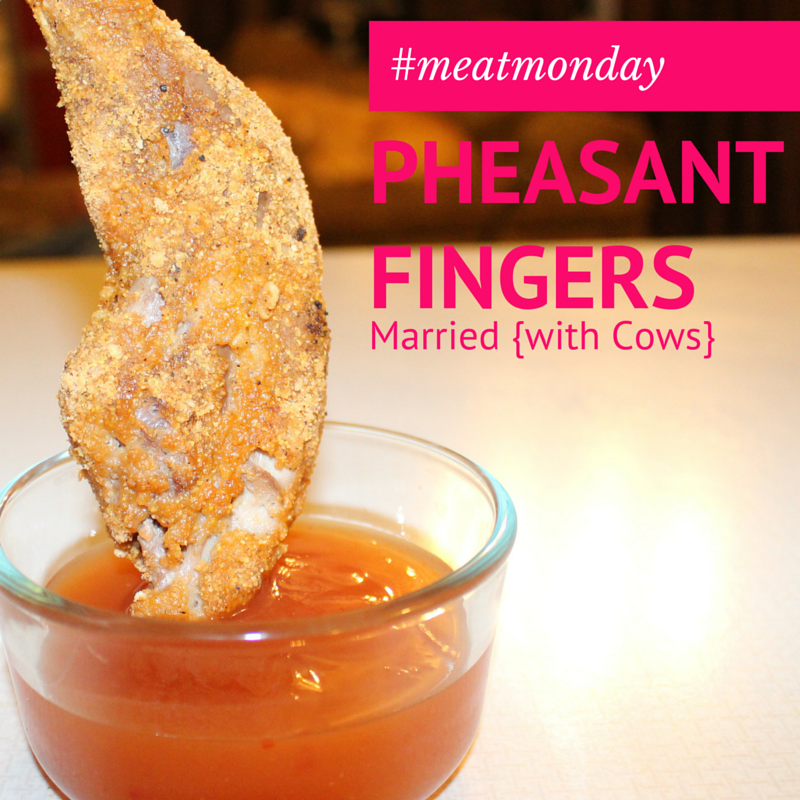 This recipe is pretty straight forward but a quick and easy hit. Ingredients: Pheasant legs or breasts (cut into slices) Shake & Bake flakes Eggs After washing your pheasant legs or breasts (and removing all pellets!) coat with egg and then throw them in a bag of Shake & Bake (purchased or make your own). Lay on a cookie sheet and cook on 400F for 20 minutes or until cooked. You may also like these other #meatmonday recipes... 4 Favorite Pheasant Feasts
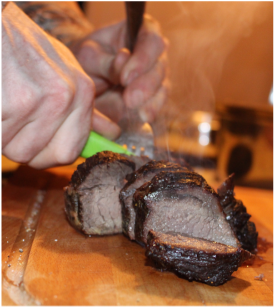
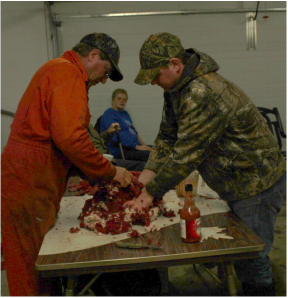
Apple Pheasant Bake Peasant's Pheasant Pot Pie Pheasant Sliders Big Game Sausage Easy Smoked Deer Roast Posted By: Jesse Williams Have you heard of #meatlessmonday? It's a popular hashtag on social media these days, used for advertising dinner recipes that don't include any meat. It has popped up in my news feed a lot lately and I can only assume it has something to do with the rising cost of meat as a protein these days. While we are cattle producers and certainly enjoy a cost reduction on our home grown beef, I cringe every single time I reach for a different meat source at the grocery store. And because I am SO cheap, I try to avoid buying meat at all costs. To get us through the winter, my hubs does a lot of game hunting, allowing us a great variety of protein sources for our diet, without breaking the bank! Over the month of January Clay and I will be posting some of our favorite winter wild game recipes each Monday using the hashtag #MeatMonday. So get your crock pots warm and your smokers ready, because there are tried, true & old fashioned wild game recipes coming your way! 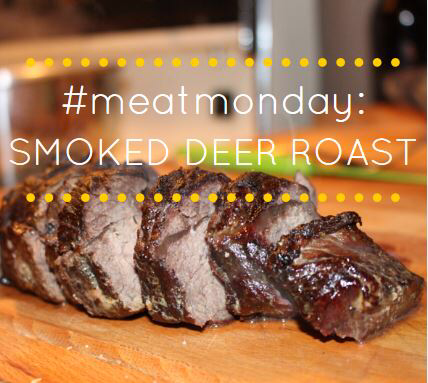 Smoked Deer Roasts Of course this starts back in November, in our area, when you can hunt for mule and white-tailed deer with appropriate licenses within a certain season. Clay was drawn for and shot both a white tailed buck and a mule doe this year. Because of our nice chilly Alberta winters, we are able to skin and hang our deer in an un-heated shop until we are ready to butcher. The carcass stays frozen and is protected from scavengers. To make processing easier, we usually wait for 2-3 friends or relatives to shoot their deer, before we all butcher the animals together. Many hands make for light work, and that way we can share all of the deer between families. We typically divide our meat into two categories; back straps are saved for deer roasts and the rest of the animal is ground for sausage (click here for our Big Game Sausage Recipe). I am sure you could get a lot fancier with your cuts if you wished, but this suits are families just fine. Once off the carcass, the back straps are simply cut into family sized roasts, which in our case, are quite small, seeing how there are only two of us! From there, they go straight into the smoker. Our roasts are typically smoked for 4 hours. They are essentially cold cooked by the time they are taken out, but we really like the smokey flavor and the tenderness it lends. After smoking we package the roasts for the freezer, wrapping them in freezer paper and tape. Don't forget to label them with the date! Oven Baking
BarbequeMore often than not we cook our deer roast on the Barbeque. It's quicker and easier (because that's the hub's domain!) and involved less dishes.
Thaw your deer roast and throw it directly on the Barbeque rack on high heat for 40 minutes to an hour and voila! The outside will be crispy but the inside will still be tender and juicy! We also find that more of the smokey flavor shines through with the Barbeque rather than the oven, but it's all about your preferences. Sometimes we do add some Barbeque sauce to add an extra kick. 
Posted By: Jesse Williams  Both my family & Clay's are game hunters, so growing up I knew that the new year meant deer sausage making time! It often involved a ton of cousins, friends and neighbours, a fair bit of liquor and a long day of fun. Depending on the tags we are drawn for, we usually butcher 3-5 deer per year and split it between 2 -3 families. Since I got married, we have been making our deer sausage with my brothers-in law, but the same trusty recipe from my mom & dad Baron still holds tried, true & my favorite! Baron Garlic Sausage -100 lb Batch 60lbs of deer/ 40 lbs of pork Each year we seem to waiver on this. Depending on how much fat you keep from your deer, and if you use trimmings, fat or the whole pig carcass, you will want to adjust the ratio of deer to pork. This year we did 70/30 because the pork trimmings were almost entirely fat. Just fry up a patty sample of your mixture and see if you like the fat content. You can always add more deer or pork to your liking. We use the same garlic recipe below for our moose and elk sausage. When I was little, we used to raise our own butcher pigs just for sausage. Nowadays, with an anti-pig husband (sigh!), our best luck is to buy a mature butcher pig from the local Hutterite Colony. Sometimes they will even butcher it for you, or you can take it to a local butcher and have it done the way you like, leaving out the good cuts for your freezer. Spice Mixture (for 100 lbs) Mix together & sprinkle over the ground meat: 1 cup sea salt (or non-iodized salt) 1 cup black pepper 1 cup garlic salt 1/4 cup tender quick Add to meat after the dry ingredients: 1 1/2 cups minced garlic in 3 cups of boiling water* **This is my mom's trick. Soak the minced garlic (you can buy it minced at the store, or spend hours peeling & mincing yourself) in the boiling water. We do these up a bit ahead of time, put the 3 cup mixture in jars and let the water infuse with the garlic. The liquid helps to mix the ingredients together, and the temperature helps keep mixing hands warm, especially when the ground meat was frozen previously! You can add more boiling water if needed to make the meat easier to mix.
Casings Mom says the best casing are sheep gut casings and we have a tradition of getting them from Brooks Meat Packers, a local butcher shop. We seemed to have had the best luck there, as other sources have given us casings that broke very easily and made sausage making a nightmare. I am sure there are many different types and sources that work, but we tend to stick to what has served us well in the past. Soak your thawed casing salted water prior to use. Keep them in the water until you are about to thread them onto the sausage press. Don't allow them to dry out.
Smoking
PackagingSome people get fancy with their packaging using vacuum sealers, but even doing 3 or 4 deer per year, we always run out before the year ends, so paper packing works just fine for us. If you are planning on keeping your sausage for long periods of time in the freezer, maybe a vacuum sealing system would be better for you to prevent spoiling. 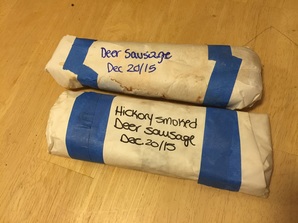 We purchase freezer paper (paper on one side, wax on the other) from our local grocery store. You can usually buy it in 50 ft rolls. For 300 lbs of sausage this year, we used about 250 ft of paper, however it will vary based on your wrapping technique and size of packages. Tape seems to be a big issue for us. You can purchase Freezer Tape which is specifically made for wrapping items for the freezer. It looks like regular masking tape, but trust me- masking tape doesn't work! The second it hits the freezer it loses its stickiness and just falls off! I had some freezer tape left over from a few years ago, stored in cold storage (our c-can), and when I took it out to use this year I was very disappointed. Apparently it cannot be frozen (prior to use). It wouldn't even come off the roll! So if you do manage to find the elusive freezer tape, store it inside for next time! I have purchased Freezer Tape at our local grocery store before, however this year it was impossible to find. You may want to try you local hardware store or Canadian Tire, although it can be quite tricky to get a hold of. Because we were low this year, we tried a number of different tapes. All-Weather Scotch tape (blue) seemed to work great. We actually found it in the painting section at Canadian Tire. It looks a lot like painting tape. We also tried a very thin, plastic sealing tape recommended by our local hunting store, but it was hard to use, and had to use a lot of it to make it to stick. LabelingWe don't do anything fancy here. We just use permanent marker to write the type of deer sausage it is, and the date. This way we can identify how old something in the bottom of our freezer is (although we never seem to have to worry about freshness when it goes so fast!). After all that work, now sit back, kick your feet up and enjoy the fruits of your labor! We would love to hear your feedback, comments or suggestions if you make your own deer sausage. We are by no means experts, but we do have a ton of fun and get a lot of satisfaction knowing we have a freezer full of meat to enjoy all year round. Cook up a batch & enjoy! You may also like these other #meatmonday recipes...
|
A Blog About Our Life, Love & Lessons Learned on the Ranch
Categories
All
in the mediaArchives
February 2024
|